Multi-tenant, and I check it
Every company's data stays its own, and that's enforced on the server, not just hidden in the app. I review it regularly and test every change.
Eric Czimcharo · Founder, EMC Horizons
I'm Eric Czimcharo, and I started EMC Horizons to get back to the days when things just worked, before private equity firms started putting profit ahead of doing the job right. Everything I build has one goal: work efficiently, work effectively, and work every time.
I'm a tech, and I build the tools I wanted on the job. Tech Ops is the first one, and I built and run it on my own. Threshold and Ergora are next.
Counted from the Tech Ops repository on September 25, 2026. One developer: me.
Main project · 01
Field service teams usually juggle a ticket system, a project tracker, an inventory spreadsheet, a group chat and a shared drive. Tech Ops puts all of it in one app on one data model, so the tech on the roof sees the same ticket the dispatcher just assigned, with the parts the warehouse just pulled.
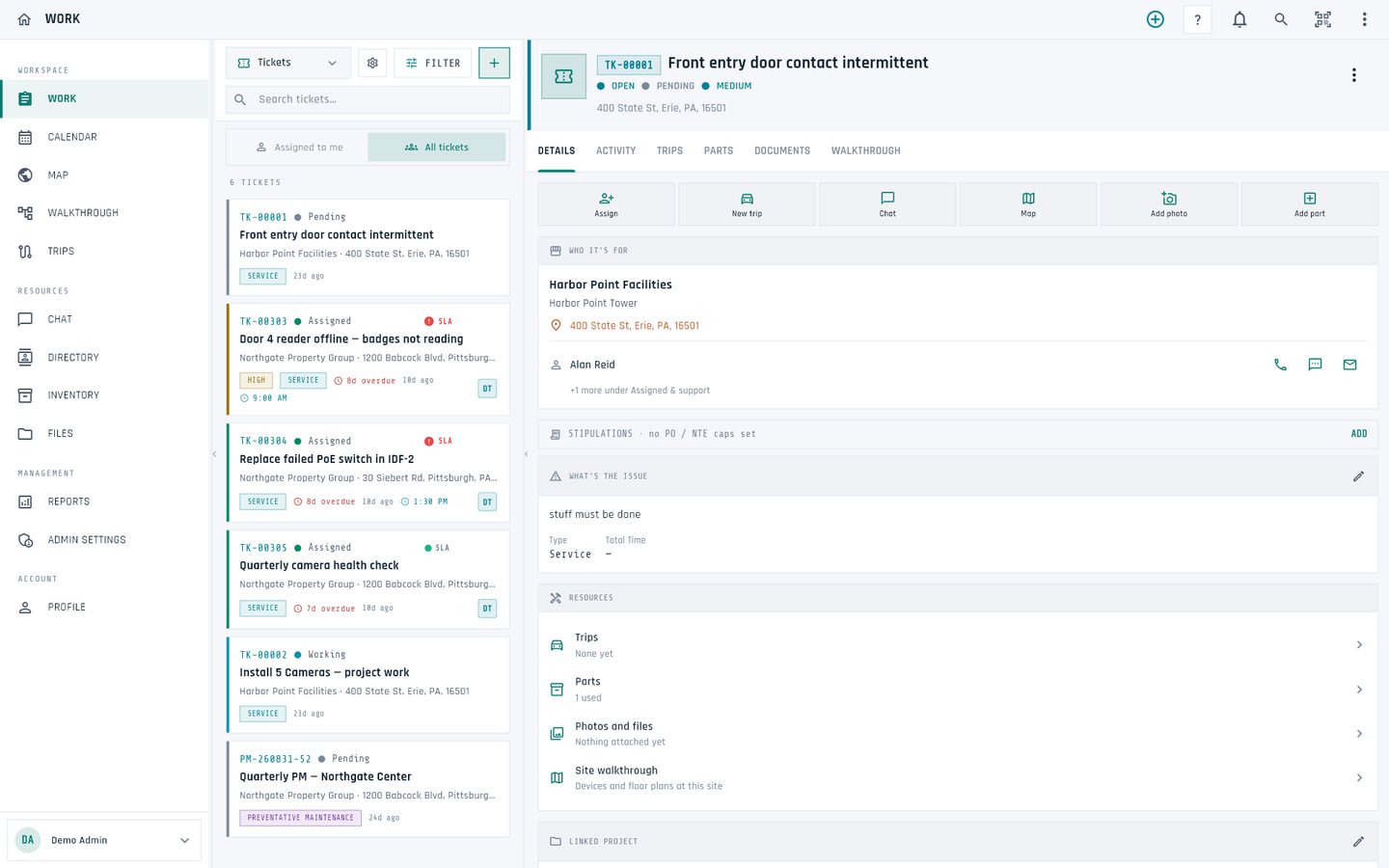
The Work view on desktop. Real app, demo company data.
All of it. There's no team behind this page. I'm the designer, the developer, the tester and the person who answers the bug reports.
Every company's data stays its own, and that's enforced on the server, not just hidden in the app. I review it regularly and test every change.
Millie answers questions about the work in front of you, drawing on the ticket, the site and trade references. Admins turn it on or off per person.
A spreadsheet editor with a formula engine I wrote: more than 90 functions, array formulas that spill, borders and theme colours. It reads and writes real .xlsx files.
Each company gets its own cloud storage, with a file browser, previews and rename. Photos and attachments from every part of the app live there too.
Backed up every night and kept off site, and restores get tested on a schedule. A backup nobody has restored isn't a backup.
English, Spanish and French, about 8,800 strings each. A test fails the build if new English text sneaks into a screen.
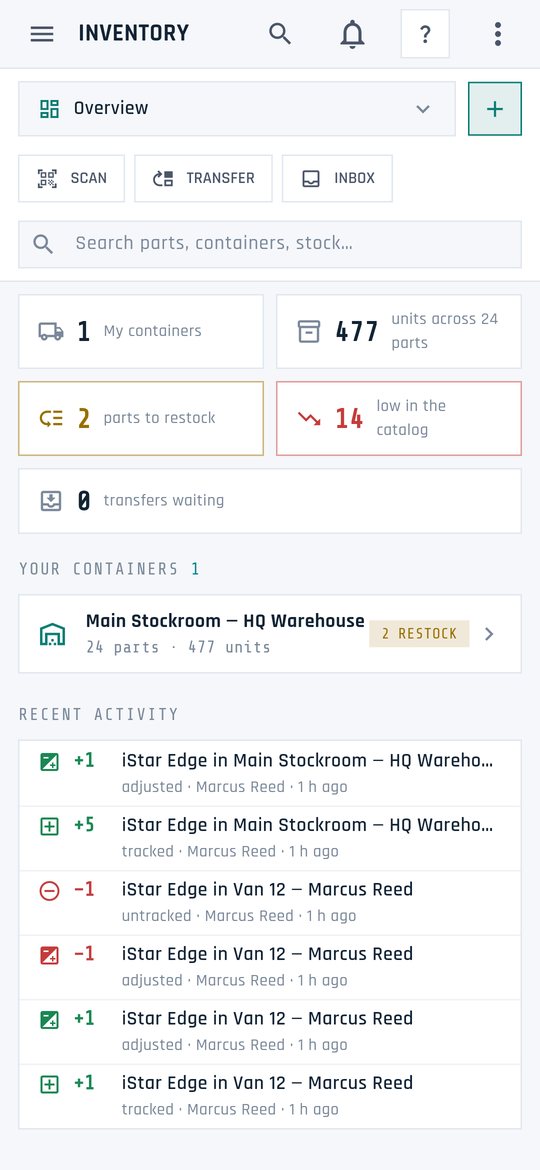
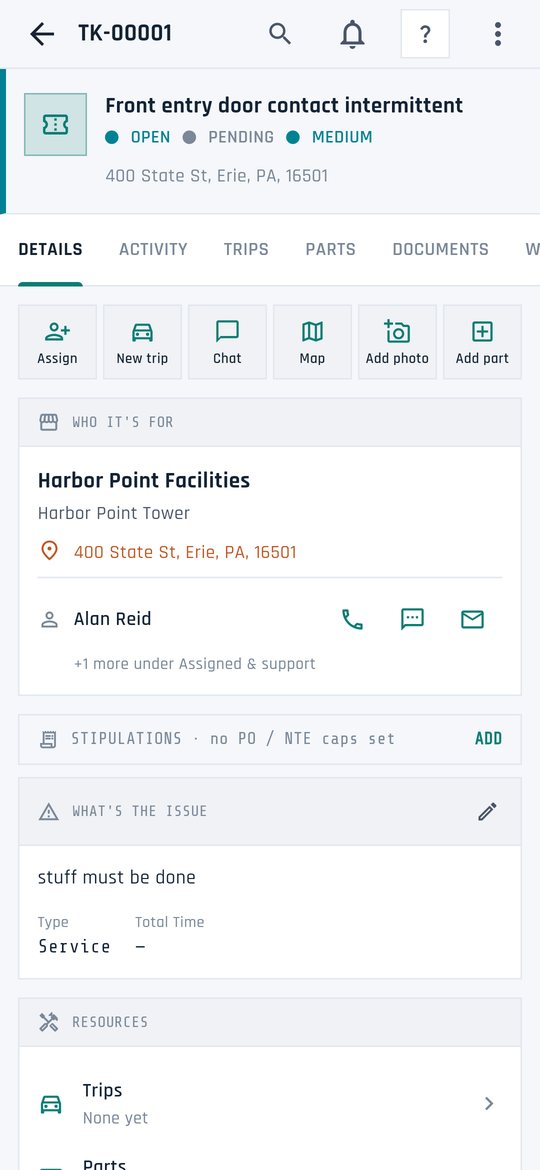
Most of this app is used on a job site, one-handed. I test every screen I change on real phone sizes and in all three languages before it ships.
It's the same app in a browser, on Android and on an iPhone, so a fix lands everywhere at once. The whole test suite runs before every release.
Also on the horizon · 02
Physical access control, hardware and software together. Certified door-control nodes snap onto a bus like breakers in a panel, and a single comms node is the gateway and brain. It's local first and fails secure, so the doors keep working when the network doesn't.
Explore ThresholdAlso on the horizon · 03
Ergora comes from the Greek for work, ergon, and place, chōra: the place where the work happens. It's glasses and a server for people working a shift at a fixed site, like a hospital, a prison, a warehouse, an airfield or a plant. It's work gear, not something you take home. It's its own product, with its own server and glasses. First comes a test server and mapping real spaces, then the kit below.
$12,500One server that lives at your site and five pairs of glasses. Add more pairs any time.
I ship the kit, then come out to map your site and train your people on site, or run a demo first. Doors, panels, routes and hazards are pinned where they really are, and their status shows in the glasses, even behind a closed door. Your site's map and data stay on your own server.
Advanced technology · 04
I'm building for spatial glasses: notes, labels and steps pinned to the real world, with Millie in your ear. One app, set up for the job you do.
Capture a scene as you walk it. A depth scan records the room in 3D, so it can be reviewed later from any angle, like a free camera, long after the scene is cleared. Your view can stream live to the office, or a second detective can join a call and see exactly what you see. Millie keeps the notes: interviews written up, and a pin board that ties people, places, times and evidence together and points out what doesn't line up.
For fire, elevator, building and equipment inspections. The checklist floats beside the equipment you're looking at, Millie reads the nameplates and tags, and every photo and note is pinned to the spot it was taken. The report is mostly written by the time you walk out.
For a facility's own engineers and staff. Procedures step by step at the bench, PPE reminders before you reach the door, and the site's own rules built in: restricted doors blacked out, faces hidden, nothing recorded unless the site allows it. A security QR at the entrance sets those rules for every pair of glasses that walks in.
Scan the asset label on a panel and every board inside is labelled, with lines to each terminal and plug, pinned in place. Set it up once, and the next tech, on any day, with any pair of glasses, walks into a labelled room. A terminal with an open ticket lights up.
A zombie survival board game for spatial glasses. The town, your survivors and the dead play out on any coffee table, and you move the pieces with your hands. Built for solo and co-op first, with online play with friends anywhere.
How I work · 05
I run the app the way people use it, on real phones and browsers against the live system, and look at every screen I change before calling it done.
Every release is checked after it goes out. "Deployed" means proven, not assumed.
Customers' data stays separated and protected. I review the app for security as part of the work, not as an afterthought, and test every fix.
Reports from inside the app come straight to me. I go through them every morning, and each one gets closed with the version that fixed it.
Contact
If you're hiring, or want a walkthrough of Tech Ops or the code behind it, email me. I'll get back to you.